
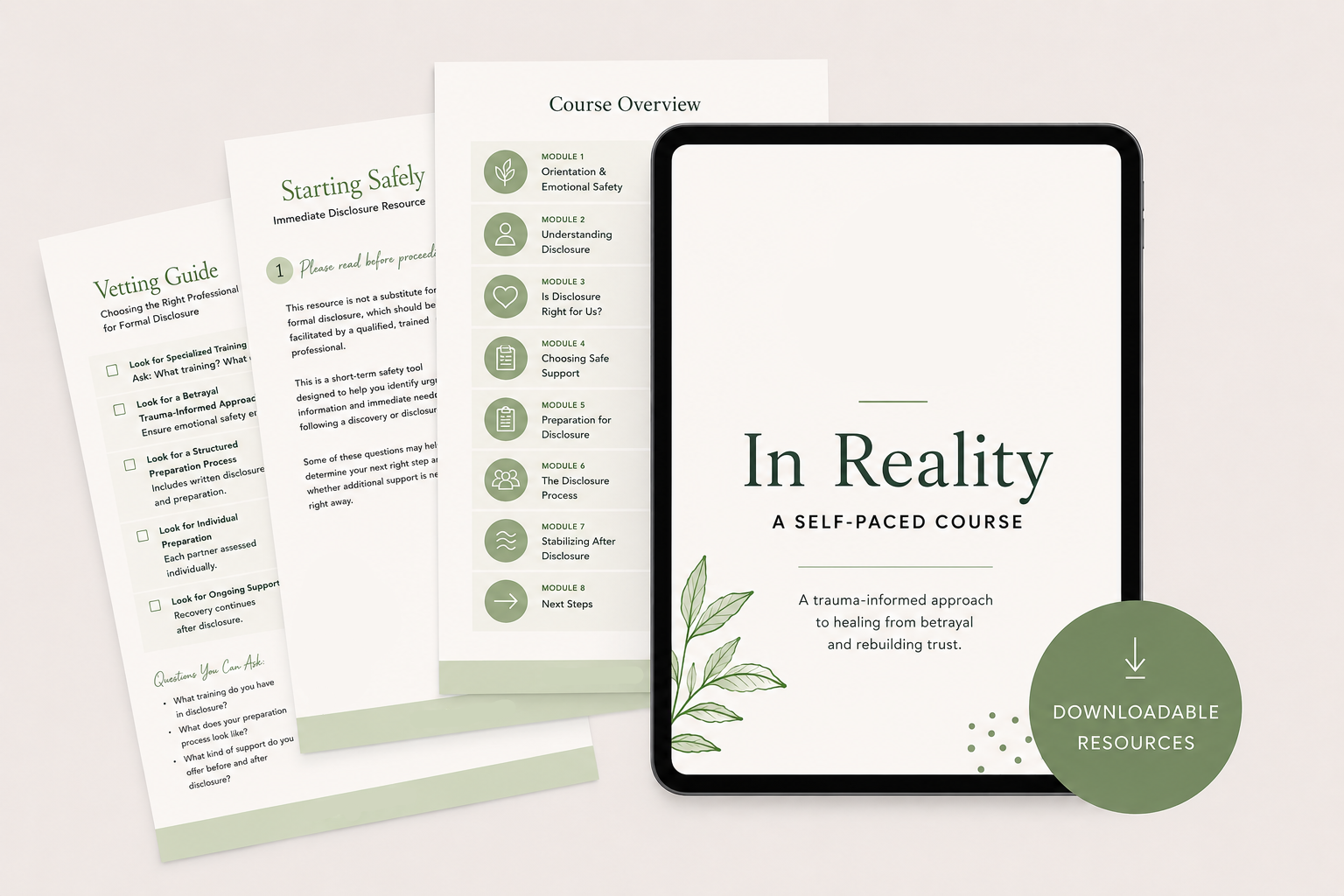
In Reality
An Exploration of Formal Therapeutic Disclosure
If you're considering a therapeutic disclosure, you may be wondering whether it will help create clarity and healing—or cause further harm. This self-paced course will help you understand the purpose of disclosure, explore the current research, and evaluate whether disclosure is an appropriate next step for your situation.
Learn the essential components of a trauma-informed therapeutic disclosure:
Understand the goals, benefits, and limitations of disclosure based on current research and clinical best practices.
Receive a FREE professional vetting guide to help you evaluate therapists, coaches, and other helping professionals who offer disclosure services.
Review current research regarding disclosure and polygraph testing, including important considerations for both partners.
Explore common mistakes that can undermine the disclosure process and how to avoid them.
Learn what post-disclosure care should include and how to prepare for the next phase of healing and recovery.
Gain practical tools to help you make informed decisions about your own disclosure journey.
Whether you're a betrayed partner seeking clarity or an individual preparing to take accountability for past deception, this course will provide the education and framework needed to approach disclosure with greater confidence and understanding.=
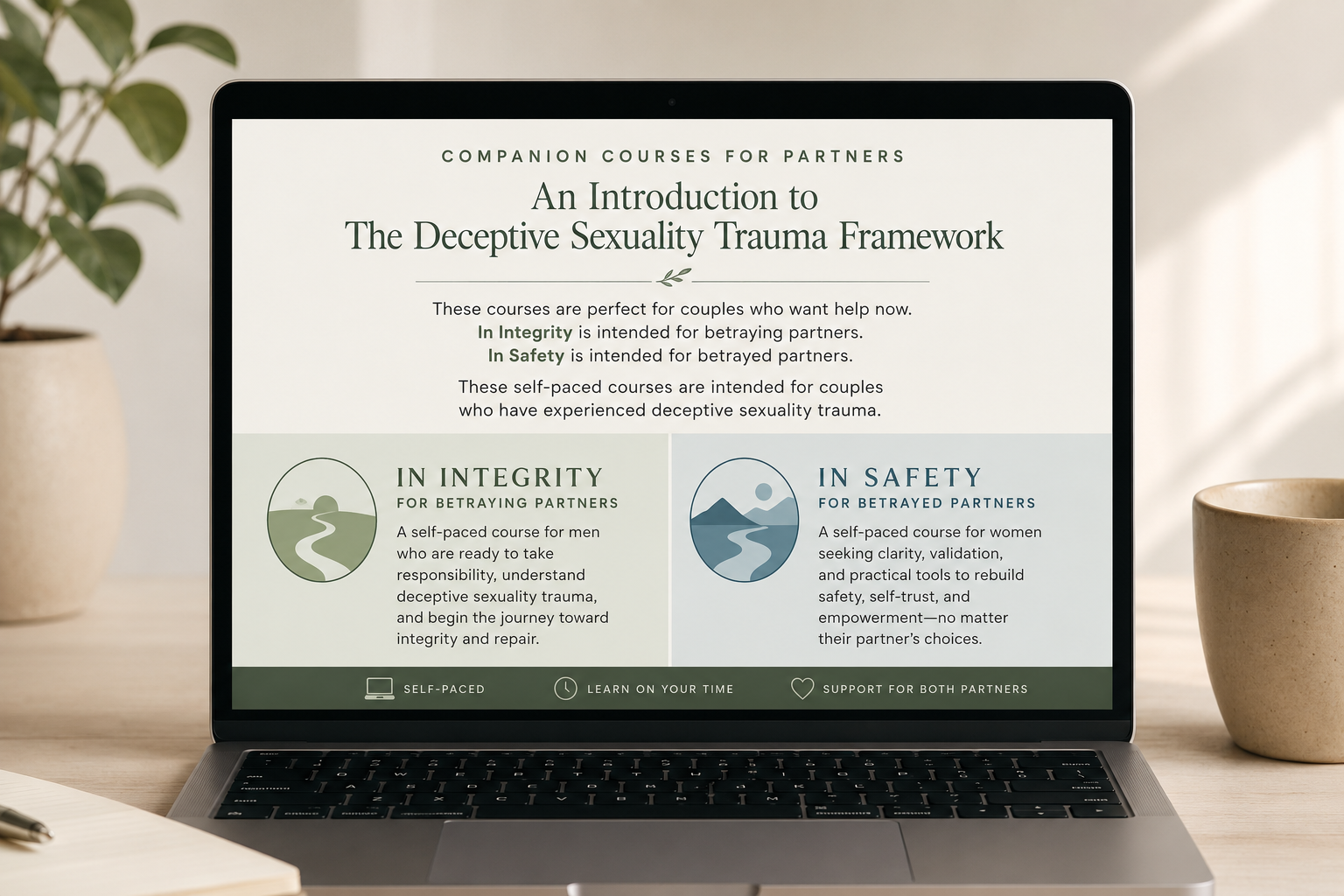
In Integrity & In Safety
Companion Courses for partners: An Introduction to The Deceptive Sexuality Trauma Framework
These courses are perfect for couples who want help now. In Integrity is intended for betraying partners. In Safety is intended for betrayed partners. These self-paced courses are intended for couples who have experienced deceptive sexuality trauma.
Many couples describe feeling confused, disconnected from themselves, and unsure of what healing should actually look like. Unfortunately, much of the information available today focuses on saving the relationship before helping you understand what happened to you.
This course offers a different approach.
In These Courses You'll Learn:
The foundations of Deceptive Sexuality Trauma and Abuse Victim Trauma Reality
How secret sexual behavior impacts individuals, relationships, and families
Why traditional recovery models often leave partners feeling unseen
The difference between behavior change and genuine integrity development
How trauma affects your nervous system, emotions, and decision-making
What true relational healing looks like—and how to recognize it
Practical next steps for creating safety and support
Course Details
5–8 minute straightforward research packed modules
For the price of one therapy session you can get access to 3 months worth of psychoeducation in one self-paced course
Includes downloadable worksheets and reflection exercises
Are you ready to see what has been missing in your individual therapy? Tired of your couples therapist telling you to its time to just move forward? What if the lies are continuing? There may have been big steps made in addiction recovery but is there behavioral truth? Integrity? Learn how to work toward reconnection; but start it off in the right way.

In Openness
COMING SOON: Educating our young people about consent and pornography when betrayal has been a part of your story.
This short course will prepare parents for:
Age-appropriate language and scripts for discussing bodies, boundaries, privacy, and respect
Practical strategies for talking about pornography; even while this topic hits very close to home
How to foster critical thinking about media, objectification, and cultural messages about sexuality
Tools for managing your own emotional responses around these topics
Guidance for creating a family culture that supports honesty, safety, and healthy sexual development; even when that hasn’t always been there
You know that these are important conversations but what if you have a history of sexual acting out? Or what if your spouse has betrayed you? Get specific support as you navigate this.
You'll leave with practical tools, conversation guides, and a framework for ongoing discussions that evolve as your children grow.
In Intersection
COMING SOON: For many members of the Church, the impact of deceptive sexual behavior extends beyond the individual and the relationship—it can profoundly affect faith, community belonging, and trust in spiritual leadership. This course explores the complex intersection of betrayal trauma, recovery, and religious life, offering practical guidance for individuals and couples navigating these challenges within an LDS context.
In this course, you'll learn:
How to effectively advocate for yourself, your spouse, and your family when working with bishops and other ecclesiastical leaders.
How to navigate conversations where church leaders may have limited training in betrayal trauma, deceptive sexuality, or trauma-informed care.
The unique burden many partners experience as "secret keepers" within faith communities and how to address the isolation, shame, and silencing that often accompanies that role.
How church culture and gender dynamics can influence responses to disclosure, accountability, and healing.
Practical tools for setting boundaries at church while maintaining your own spiritual integrity.
How to navigate a faith crisis, spiritual questioning, or shifts in belief that may emerge in the wake of betrayal.
How to pursue healing and authentic devotion to faith while making space for grief, anger, confusion, and uncertainty.
Whether you are seeking support from church leaders, questioning long-held beliefs, or trying to reconcile your faith with the realities of betrayal, this course will provide compassionate guidance, practical tools, and a framework for navigating this deeply personal journey.
You do not have to choose between acknowledging your betrayal experience and honoring your faith. This course will help you explore both with greater clarity, confidence, and self-trust.